Research-led / Slash API / Odoo prototype

Slash to Odoo, built from public signals and a mocked API.

I wanted a pitch artifact that said more than “I can code.” So I picked a manual financial workflow, traced a healthcare angle, chose Odoo as the accounting target, and kept moving even without a live Slash API key.

The integration matters. The way I got there matters more.

Demo

A weekend prototype, end to end.

This walkthrough shows the research path, the dummy Slash API, the sync flow, and the Odoo-side validation.

Problem

A realistic path from Slash transactions to accounting truth

A real workflow, real API constraints, and a prototype target I could validate locally.

The problem is simple: customers do not want card spend trapped in one system while accounting is handled manually somewhere else. A Slash-to-accounting integration can replace CSV exports and manual re-entry with a cleaner path from transaction to expense record in real time.

From conversations with people at Slash, it seemed clear e-commerce was already a strong market, so I started looking at where expansion could happen next. Healthcare stood out through hiring and market signals, which led me to healthcare accounting blogs on Slash and ultimately Odoo, since it was open source, relevant, and something I could validate locally in a real environment. This was less about replicating an integration but more about validating how Slash could extend into more operationally complex verticals.

What I built

The prototype shows how I close gaps.

Research depth, implementation judgment, and bias for action.

The goal was to automate what could otherwise become a manual CSV handoff: fetch card transactions, filter and map them into accounting-ready expenses, create the records in Odoo, and preserve a sync trail back on the Slash side.

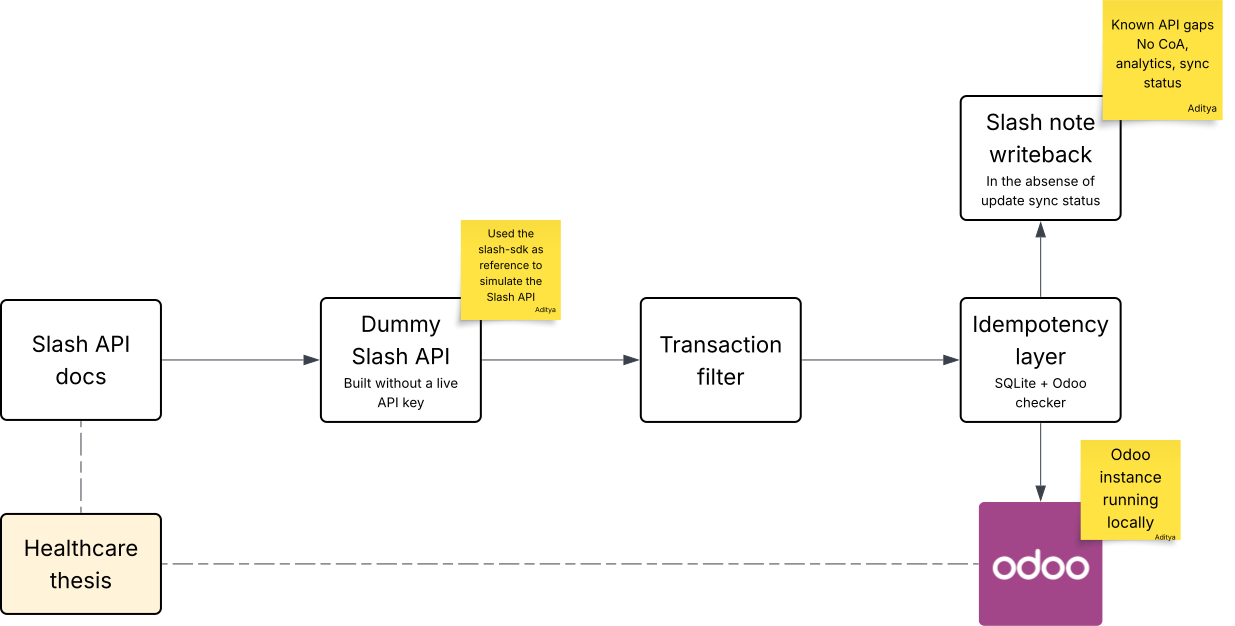
The blocked path was access. I did not have a Slash environment or sandbox API key, so I used the public docs and SDK shape to build a dummy Slash API that let me keep moving.

Research-first path into the prototype

The project started with docs, SDKs, and market research, then narrowed into a specific workflow worth building.

  • 01 Slash docs and SDKs helped me understand what was realistically possible from the outside.
  • 02 Healthcare research gave me a clearer vertical and accounting use case to build toward.
  • 03 Odoo gave me a real accounting system I could test locally.

AI as leverage, not a shortcut

AI was part of the workflow from research to implementation, but the actual product thinking stayed grounded in the problem.

  • 01 Used AI to synthesize docs, compare approaches, and move faster through intial buildout.
  • 02 Pressure-tested edge cases around idempotency, API gaps, and accounting handoff.

No sandbox environment? Built anyway.

I did not wait for an API key. I recreated the transaction and note-update surface closely enough to build against it immediately.

  • 01 Mirrors realistic Slash transaction fields and pagination shape.
  • 02 Supports note patching so the full sync loop can be exercised.
  • 03 Uses the slash-sdk as a reference point for the shape.

Why Odoo for this prototype

Odoo came from the research path, not just convenience: it appeared in Slash's healthcare accounting content and gave me a real system I could validate locally.

  • 01 Healthcare expansion research pointed me toward accounting workflows beyond QuickBooks.
  • 02 QuickBooks already had a native Slash integration, so Odoo made the prototype less repetitive.
  • 03 Because Odoo is open source, I could run it locally and validate it.

Create-only sync with idempotency

The sync is designed to be safe to rerun and conservative in behavior.

  • 01 SQLite state plus Odoo-side markers for duplicate protection.
  • 02 Re-runs are safe and will not create duplicate records in Accounting System.

Research surfaced the API gaps too

The useful part was not just building the happy path. It was identifying what the public API does not expose yet.

  • 01 No public chart-of-accounts data for cleaner GL mapping like the native integrations.
  • 02 No accounting fields or analytic plan data for richer reporting.
  • 03 No public sync-status surface like native integrations seem to have.

How it works

From mocked Slash transactions to Odoo expenses.

The prototype replaces a manual accounting handoff with a tested sync loop: transaction data in, expense record out, and a trace back to the source transaction.

1. Simulate Slash

Public docs and SDK types were enough to simulate Slash when sandbox access was unavailable.

2. Create the expense

Transactions are filtered, mapped, deduped, and created as Odoo expenses.

3. Close the loop

The Odoo record ID is written back to the Slash note because public sync status is not exposed.

Architecture flow showing Slash docs leading into a dummy API, filtering, idempotency, Odoo, note writeback, and known public API gaps.

Selected proof points

Real scope. Real ownership. Real numbers.

From sales calls and architecture to shipped systems and measurable fintech scale.

  • Led Ramp partner projects from initial prospect calls through architecture, implementation, and delivery.
  • Owned full technical execution across customer-facing financial integrations from 0 -> 1.
  • Supported $768M+ in annual Ramp bill pay and card spend through deployed integrations across 15 customers.

$768M+

Annual Ramp bill pay + card spend supported through integrations I architected and delivered.

Across 15 customer deployments.

15 Customers

Built and launched integrations across diverse financial workflows, customer environments, and operational constraints.

0 -> 1 Ownership

Took projects from sales call and technical scoping through architecture, implementation, and production delivery.

Business -> Build

Translated customer pain into architecture, developer execution, and shipped client-facing systems.

Contact

If this sparked the right kind of conversation, that's the point.

This draft keeps the contact surface intentionally light.

If this project resonates, I would love to walk through the research, the prototype decisions, and what I would build next.